

Are you ready to make your bathroom better? Hold on just a minute. Before you start tearing out tiles or shopping for new fixtures, there’s some serious groundwork to do. Jumping into a bathroom remodeling without proper preparation leads to budget overruns, design regrets, and construction headaches that could’ve been avoided.
Let’s walk through everything you need to think about before starting your bathroom remodeling project. Getting these details right upfront makes the difference between a smooth transformation and a stressful mess.
Why Preparation Matters for Bathroom Remodeling
A bathroom is are complex space packed with plumbing, electrical, and ventilation systems in a relatively small footprint. Rush into demo day without a solid plan, and you’ll face surprise costs when contractors discover hidden water damage or outdated wiring.
Taking time to consider every aspect before construction starts saves you money, time, and frustration. You’ll make better decisions, communicate clearly with contractors, and end up with a space that actually works for your daily routine.
Think of this planning phase as your insurance policy against renovation disasters.
Defining Your Goals For Renovating Your Bathroom
Before you browse Pinterest boards or flip through design magazines, get crystal clear on what you’re trying to accomplish. Are you updating a dated space to increase home value? Creating a spa-like retreat for relaxation? Improving functionality for a growing family?
Write down specific problems you want to solve. Maybe your shower is too small. Perhaps you lack storage for towels and toiletries. The lighting might be terrible for applying makeup. Or you need better accessibility features for aging in place.
Once you identify your priorities, every other choice becomes easier. You won’t get sidetracked by trendy features that don’t serve your actual needs.
Ask yourself these questions: How long do you plan to stay in this home? Will this bathroom serve young children, teenagers, or elderly family members? Do you prefer quick showers or long soaks in a bathtub?
Your answers shape everything from layout to fixture selection.
Setting a Realistic Bathroom Remodeling Budget
Let’s talk money. According to Angi‘s bathroom remodeling cost guide, a full bathroom remodel typically ranges from $6,000 for basic updates to $75,000+ for luxury renovations, with most homeowners spending around $10,000 to $15,000.
Your bathroom remodeling budget needs to cover more than just visible materials. Factor in labor costs (usually 40-65% of total budget), fixtures and fittings, tile and flooring, cabinetry and countertops, lighting and ventilation, plumbing and electrical updates, permits and inspections, plus a 15-20% contingency fund for unexpected issues.
Hidden problems love to appear once walls open up. Old pipes might need replacement. Subfloors could have water damage. Electrical systems may require upgrades to meet current codes.
Break your spending into categories based on priorities. If a luxurious walk-in shower tops your list, allocate more funds there and save elsewhere. Maybe you choose porcelain tile that looks like marble instead of the real thing.
Don’t forget soft costs like eating out more during construction, hotel stays if you only have one bathroom, or storage fees for belongings you need to move out temporarily.
Evaluating Your Current Bathroom Layout
Take a hard look at your existing space. Does the bathroom layout work efficiently, or do you constantly bump into things? Can the door swing open without hitting the toilet? Is there enough clearance around the bathroom vanity?
Building codes dictate minimum clearances for fixtures. You need at least 21 inches in front of toilets and sinks, 30 inches of space in front of showers, and 60 inches of turning radius for wheelchair accessibility if that’s a concern.
Changing your layout costs more than keeping fixtures in their current locations because moving plumbing lines requires additional labor and materials. Sometimes it’s worth the investment. Other times, working within existing constraints makes more financial sense.
Consider traffic flow. If multiple people use this bathroom simultaneously, the layout should allow for that. A separate toilet room adds privacy. A double vanity eliminates morning bottlenecks.
Think about door placement, too. Does it provide privacy? Will it block cabinet doors or drawers when open?
Choosing Between Modern Bathroom Design and Traditional Styles
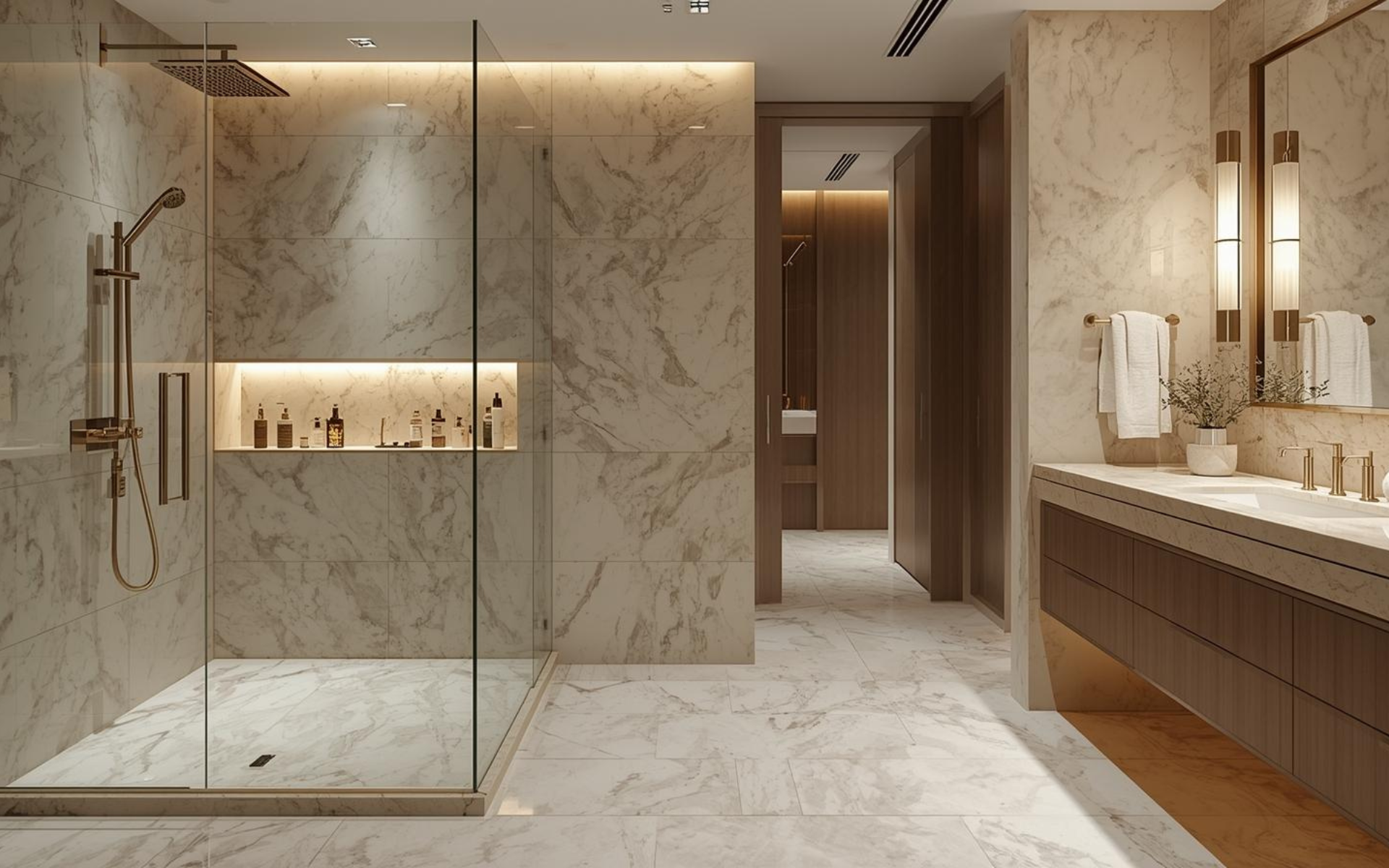
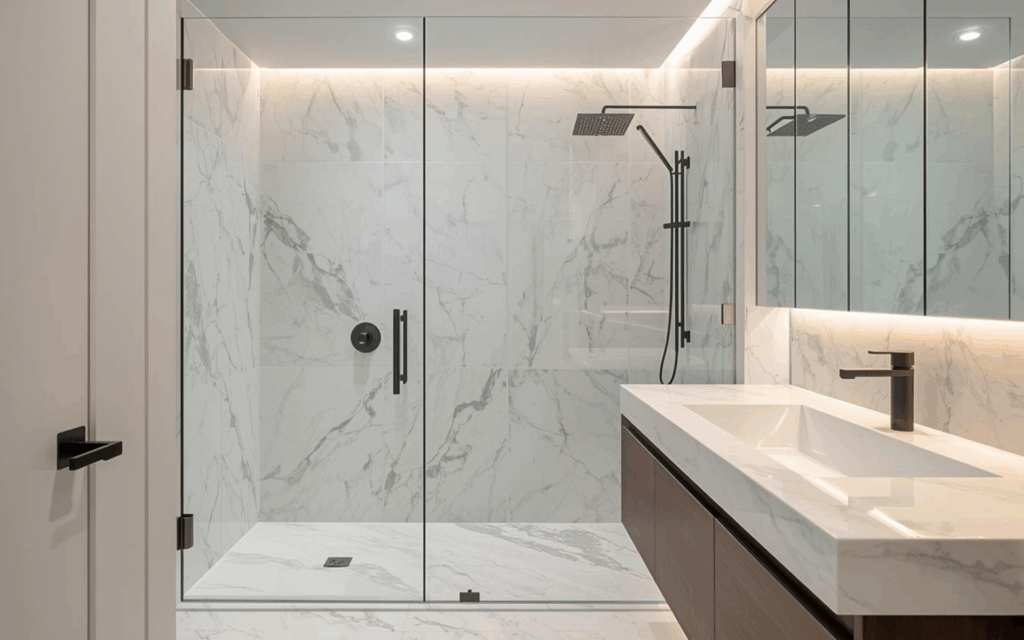
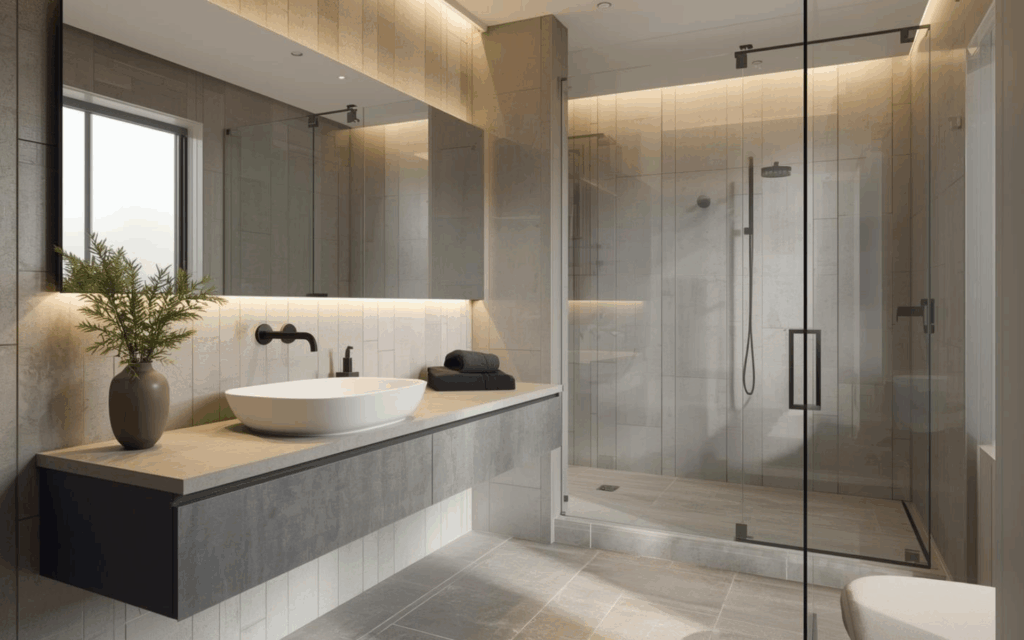
Your style preference guides everything from tile patterns to hardware finishes. A modern bathroom design typically features clean lines, floating vanities, frameless glass showers, and minimalist fixtures. Think neutral palettes, geometric shapes, and sleek materials like concrete or large-format tiles.
On the other hand, traditional styles embrace classic elements like pedestal sinks, clawfoot tubs, wainscoting, and ornate details. These spaces often include vintage-inspired fixtures, warm wood tones, and decorative tile patterns.
Neither approach is inherently better. It depends on your home’s architecture and personal taste. Just maintain consistency. Mixing too many conflicting styles creates visual confusion rather than character.
Your bathroom color choices reinforce your chosen style. Cool grays and whites suit contemporary spaces. Warm beiges and creams complement traditional designs. Bold jewel tones work in eclectic settings.
Consider how colors make the space feel. Light shades expand small bathrooms visually. Dark tones create drama but can make compact spaces feel cramped.
Selecting Your Bathroom Remodeling Concept
Beyond basic style choices, you want a cohesive bathroom motif that ties everything together. Are you going for a spa-inspired sanctuary? A coastal retreat? An industrial loft vibe? A farmhouse feel?
Your bathroom concept should guide material selections, color palettes, and decorative elements. A spa concept might include natural stone, rainfall showerheads, and soft lighting. A coastal theme could feature blue and white palettes, nautical accents, and weathered wood textures.
Creating an elegant bathroom means paying attention to details. Consistent hardware finishes throughout (all chrome, all brushed nickel, etc.) look more polished than mixed metals. Quality materials like marble or quartz elevate the feel. Thoughtful lighting layers ambient, task, and accent sources.
Don’t forget practical elements in pursuit of aesthetics. Beauty means nothing if the space doesn’t function well for daily use.
Bathroom Material Options and Durability
Your material choices impact both appearance and longevity. Let’s break down the key components.
New Bathroom Floor Considerations
Water resistance is crucial. Porcelain or ceramic tile remains the most popular choice for good reason: it’s waterproof, durable, and comes in endless styles. Luxury vinyl plank offers a budget-friendly alternative that mimics wood or stone. Natural stone, like marble or slate, looks stunning but requires more maintenance and sealing.
Avoid solid hardwood or laminate in bathrooms. They can’t handle moisture well, despite what some installers claim.
Think about comfort too. Cold tile feels harsh on bare feet. Heated flooring systems add luxury and warmth.
New Bathroom Walls and Surfaces
Moisture-resistant drywall (green board or cement board) should be used in wet areas. For shower surrounds, you’ve got options: ceramic or porcelain tile offers unlimited design possibilities, solid surface materials like Corian provide seamless looks with easy cleaning, and natural stone creates an upscale ambiance but needs regular sealing.
Bathroom walls outside the shower area can handle standard paint, but use bathroom-specific formulas with mildew inhibitors.
Planning for Proper Ventilation
Here’s something people overlook: proper ventilation isn’t optional, it’s essential. Without adequate air circulation, moisture builds up and causes mold, mildew, peeling paint, and even structural damage.
Your exhaust fan should move at least 50 cubic feet per minute (CFM) for bathrooms up to 50 square feet. Larger spaces need more powerful fans. The fan should vent directly outside, never into an attic or crawl space.
Position the fan near the shower or tub where moisture concentrates. Consider adding a humidity sensor that automatically turns the fan on when moisture levels rise.
Good ventilation also means thinking about natural airflow. If you have a window, that’s great. If not, you’re entirely dependent on mechanical ventilation.
Selecting Bathroom Cabinets and Storage Solutions
Bathroom cabinets do more than hide plumbing pipes. They provide crucial storage in typically small spaces. Consider how much you need to store: toiletries, towels, cleaning supplies, medications, hair tools, and more.
A bathroom vanity sets the tone for your entire space. Wall-mounted vanities create an open, modern feel and make floor cleaning easier. Freestanding vanities offer traditional charm and typically provide more storage.
Size matters. A 24-inch vanity works in powder rooms. Full bathrooms benefit from 36-48 inches. Shared bathrooms often need 60-72 inches, especially with double sinks.
Think about drawer organization, medicine cabinets, linen closets, and open shelving for decorative storage. Built-in niches in shower walls keep products accessible without cluttering edges.
Quality cabinet construction pays off. Solid wood or plywood holds up better than particleboard in humid environments. Soft-close hinges and full-extension drawers add convenience worth the investment.
Choosing Your Bathroom Shower and Tub Configuration
This decision dramatically affects your space and budget. According to HGTV‘s bathroom planning guide, walk-in showers dominate current trends, but your choice should match your lifestyle.
A bathroom shower without a tub frees up space and creates accessibility for those with mobility concerns. Curbless showers with linear drains offer seamless transitions and modern appeal.
Combination tub-shower units maximize functionality in smaller bathrooms. Freestanding tubs create spa-like focal points but require dedicated floor space.
Consider who uses this bathroom. Families with young children need bathtubs. Empty nesters often prefer spacious showers. Resale value matters too: homes with at least one bathtub appeal to more buyers.
Think about shower features: rainfall showerheads, handheld sprayers, body jets, built-in benches, or steam capabilities. These upgrades add comfort but increase both initial costs and ongoing maintenance.
Exploring Bathroom Ideas for Inspiration
Now comes the fun part: gathering bathroom ideas that inspire you. Online platforms overflow with possibilities, but focus on spaces similar to your square footage and budget range.
Look for the best bathroom design ideas that solve the problems you identified earlier. Need more storage? Note how designers incorporate recessed shelving. Want better lighting? Study layered lighting approaches. Craving spa vibes? Pay attention to material palettes and fixture styles.
Create a digital folder or Pinterest board, but stay organized. Separate inspirational images by category: tile patterns, vanity styles, lighting fixtures, color schemes, and layout configurations.
Share these visuals with contractors and designers. They help communicate your vision more clearly than words alone.
Just remember that magazine-worthy bathrooms often have generous budgets and square footage. Adapt ideas to fit your reality rather than trying to replicate them exactly.
Finding Qualified Remodeling Contractors
Your contractor choice affects everything. Skilled professionals deliver quality work on schedule. Problematic crews create endless frustration and costly mistakes.
Start by getting at least three detailed estimates from licensed, insured remodeling contractors who specialize in bathrooms specifically. General contractors might lack the nuanced knowledge that plumbing-heavy projects require.
Check references thoroughly. Ask to see photos of completed bathrooms, not just their best work. Visit job sites if possible. Read online reviews, but take extreme opinions (very positive or very negative) with healthy skepticism.
Ask tough questions during interviews: How do you handle unexpected issues? Who manages the daily work? What’s your typical timeline for similar projects? How do you communicate updates? What warranty do you provide?
Read contracts carefully before signing. Everything should be documented: specific materials with model numbers, labor costs, payment schedule tied to milestones, start and completion dates, change order procedures, and cleanup responsibilities.
Never pay the full amount upfront. Standard practice is one-third to start, one-third at the midpoint, and final payment upon completion and your satisfaction.
Time to Make Your Bathroom Dreams Happen
Renovating your bathroom ranks among the most valuable home improvements you can make. With thorough preparation, realistic expectations, and the right team, you’ll create a space that enhances your daily life for years to come.
Here at Onestop Kitchen and Bath, we specialize in creating beautiful, functional bathrooms that match your vision and budget. Our experienced team guides you through every decision, from initial bathroom concepts to final installation. We offer hassle-free bath renovation services with free virtual and in-store design consultations to explore possibilities for your space.
Reach out today to schedule your free consultation and discover how we can transform your bathroom into the retreat you deserve. Let’s bring your vision to life together.