


Farmhouse-style kitchens blend rustic charm with modern convenience. From cozy vintage elements to grand rustic statements, achieving the inviting farmhouse chic look depends on thoughtful details. This guide covers 20 creative ways to bring farmhouse flair to your kitchen remodel in 2026.
Rustic materials, vintage accents, and plenty of charm create the welcoming vibe signature to the farmhouse aesthetic. But you can also incorporate contemporary fixtures and appliances for a fresh spin on the classic style. Use these kitchen and bath ideas to craft your own authentic farmhouse space, whether renovating a genuine older home or achieving the aesthetic from scratch in new construction.
Warm Wood Tones
Nothing evokes a rustic farmhouse personality quite like natural wood. Use reclaimed wood, barn siding, or wood-look tile for walls and ceilings to surround the space with organic texture.
Add wood accents like open shelving, butcher block counters, and exposed ceiling beams. For cabinetry, choose styles with visible wood grain like Shaker cabinets in oak, maple, and hickory. Matte stains and paint washes enhance the handcrafted charm.
Rustic Ceiling Beams
Based on guidance from Architectural Digest magazine, achieving an authentic farmhouse design look relies on thoughtful details like exposed wood beams, reclaimed floors, and visible craftsmanship rather than just distressing factory-made materials.
Exposed wood beams instantly provide rustic appeal, and they pair especially well with natural textures. Whether authentic structural timbers or decorative faux beams, rough-hewn wood overhead adds old-world cottage character.
Painted or distressed beams complement painted cabinetry for a slightly more refined impression. Wood paneling can also reinforce the rustic feel on walls or ceilings. For truly impressive drama, extend massive barn-style timbers across the entire ceiling. Mini versions also work on cathedral or sloped ceilings.
Timeworn Wood Floors
Wooden floors pairing distressed wide planks with a worn patina ground the space in farmhouse tradition, and pairing them with original beams helps preserve authenticity. Fading, cracking, knots, and imperfections reflect the floors’ history.
New wood can mimic an aged look with wire brushing and chiseling. Matte finishes like brushed lacquer or penetrating oil protect while allowing the natural grain of dark wood to show through beneath exposed wooden beams used as decorative or structural overhead elements.
Vintage-Inspired Lighting
Cast an inviting farmhouse glow with lighting choices like galvanized pendants, Edison bulbs, and ceramic fixtures reminiscent of old barns and homesteads.
Wrought iron or brass chandeliers and sconces with gracefully curved arms suit formal farmhouse spaces. Hanging cage pendants centered over dining tables keep the look modern kitchen easygoing. Don’t forget statement barn lights over islands or sinks.
Traditional White Cabinetry
Farmhouse kitchen lighting is both a style choice and a practical one, and fresh white-painted cabinets help lighten up farmhouse kitchens. The crisp, bright finish pairs perfectly with worn wood and patinaed metals, while layered lighting adds warmth and ambiance.
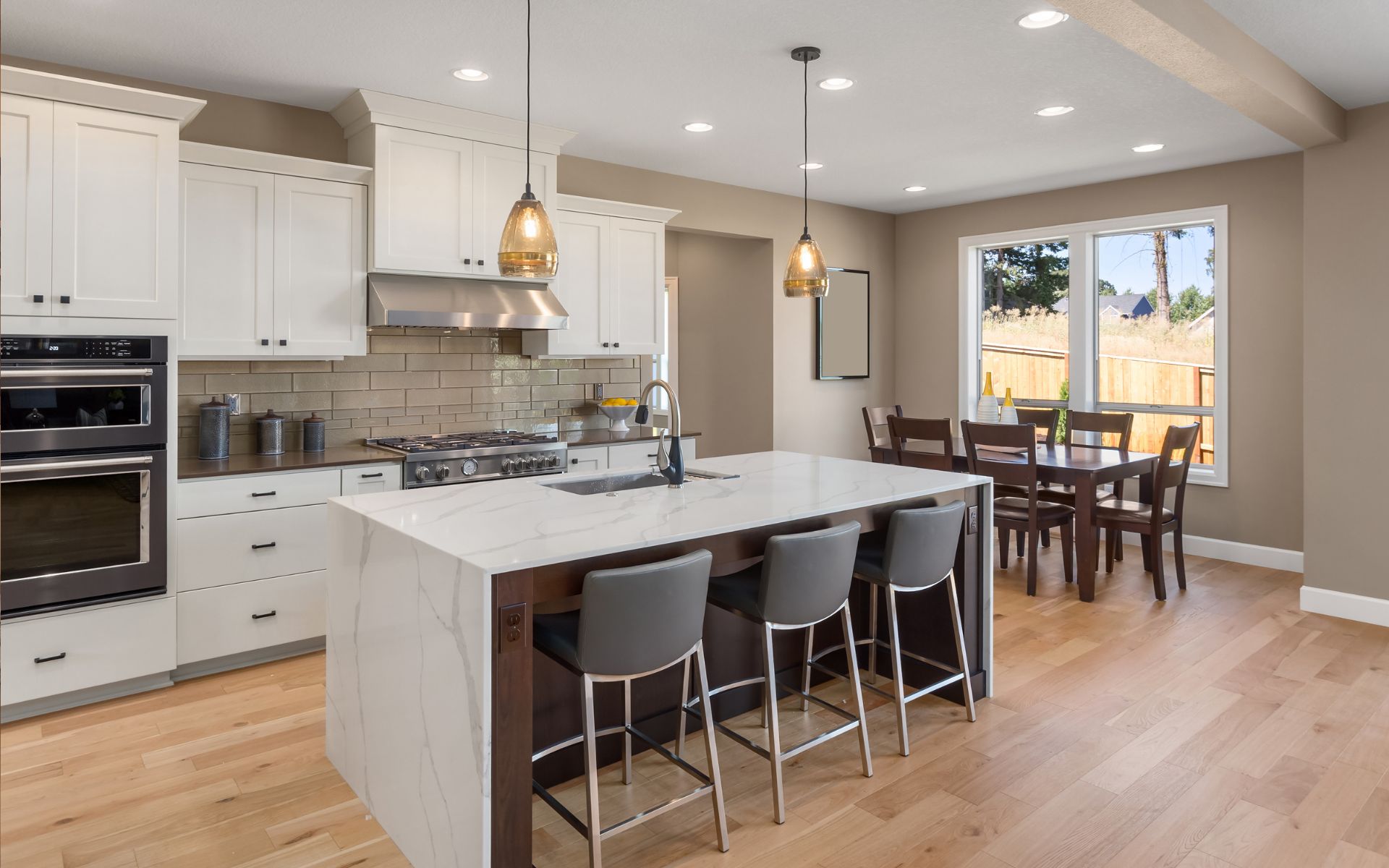
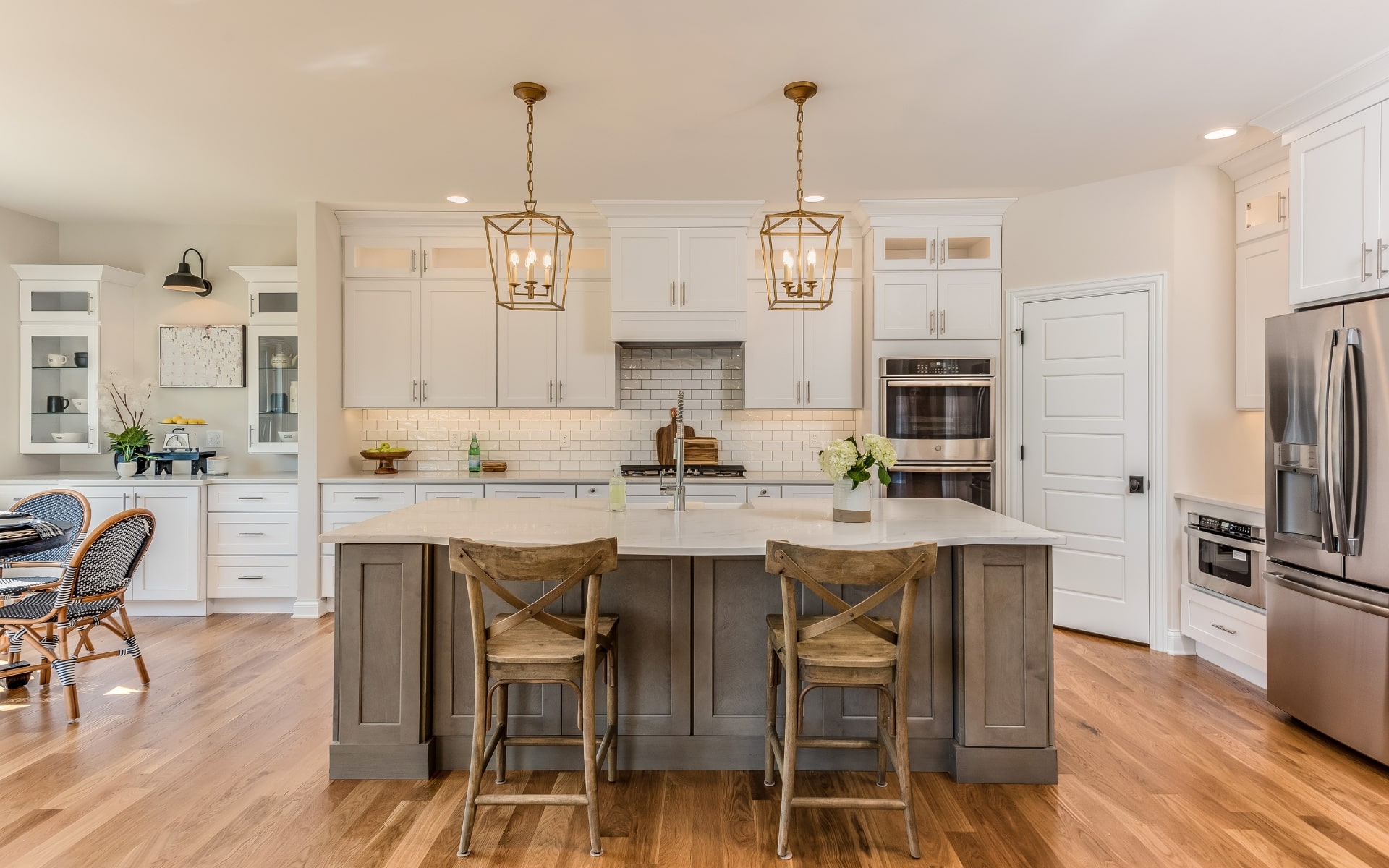
For variation, try two-tone looks combining white uppers with wood base cabinets or painted island accent colors. Add glass-front cabinet doors to showcase collections. Choose classic raised panel or recessed panel styles accented by bin pulls and cup handles in antique nickel and brass. For farmhouse flair, farmhouse kitchen lighting can include black iron chandeliers that mix rustic and modern touches. Over an island or table, pendant lights work best when hung 12-18 inches above the island.
Natural Materials and Textures
Incorporate raw, imperfect surfaces that feel pleasantly aged. In cabinetry, white cabinets are a staple in a modern farmhouse kitchen, and white cabinets with gray subway tiles are a popular pairing. Unfussy materials like galvanized metal, unfinished wood, wrought iron, and woven raffia offer authenticity.
Display collections of vintage tin containers, milk bottles, and enamelware pots. Shaker style cabinets fit this look well, and white shaker cabinets are especially common. Gray is a versatile color choice here, while light blue cabinets can add a fresh touch. Line open shelves with galvanized metal sheet inserts or chicken wire racks to create a casual utilitarian appearance. Black hardware is one contrasting option for white shaker cabinets. Use woven baskets for rustic farmhouse storage.
Subway Tile Backsplashes
Nothing shines as the quintessential farmhouse backsplash like classic white subway tile. The simple rectangular tiles in a bricklaid pattern provide a clean, neutral backdrop, and natural elements with natural materials like wood and stone are essential in farmhouse storage solutions.
Subway tiles look best with visible grout lines for gridded texture. Pair with wood open shelving rather than fussy backsplashes to give display pieces a clearer role as rustic accents. Or frame white subway tile backsplash with an accent border of vivid blue, green, or terracotta tiles for extra farmhouse charm.
Open shelves also work well with linen and woven baskets; mixing textures this way adds warmth.
Apron Front Farmhouse Sink
Deep single basin apron front sinks represent traditional farm style. Pair them with white subway tiles for a classic backsplash choice, and a white backsplash helps create a clean, timeless backdrop. The large front apron front sink now covers the sink base cabinet for a seamless farmhouse look.
Farmhouse sinks come in durable fireclay or enameled cast iron. Undermount or top-mount installation works. Choose classic white or experiment with unexpected hues like mineral blue or emerald to make the sink a focal feature. Coordinating tile color and nearby shelving helps create a cohesive look and supports the overall design aesthetic.
Butcher Block Islands
At the heart of a farmhouse kitchen, butcher block islands double as extra prep space and casual dining. The thick solid wood slab withstands daily use.
Anchor the island with a sturdy base of reclaimed wood beams, or metal pipe legs for an industrial edge. Customize with cubbies, shelves, and drawers for added storage and functionality.
Open Shelving
Warm up farmhouse kitchen walls by replacing some upper cabinets with rustic open shelves, and carry that same warmth into the room with Butcher Block Countertops, since wood tops are a preferred finish for farmhouse islands. Leave shelves raw wood or finish with a weathered stain. Include angled brackets and rod inserts for hanging utensils.
Mount shelving atop exposed beams for added character. Intersperse glass-door wall cabinets to prevent a cluttered look while still displaying cherished vintage tableware. Built-in cutting boards enhance island functionality.
Stainless Steel Appliances
While keeping most materials traditional, splurge on pro-style stainless steel appliances for chef appeal. The commercial-grade range and high-end vent hood cook up farm fresh feasts.
A sleek built-in refrigerator handles harvest produce. Skip-coated appliances that disguise the brushed metal behind false fronts. Embrace the utilitarian nature of honest stainless steel.
Copper Accents
Pops of copper instantly dial up the cozy factor. Hammered copper farmhouse sinks and vent hoods develop an attractive patina over time. Copper pots add warmth to open shelves.
Rose gold is copper’s trendy lookalike—consider mixing the two metals for depth. Brass offers a more affordable alternative for fixtures, pulls, and accessories.
Farm Fresh Flowers
Fresh-cut flowers in vintage containers personalize farmhouse kitchens, and copper details often work best as a final touch rather than the main material story. Bunches of wildflowers or flowering herbs in galvanized buckets brighten the most rustic kitchen workspace.
Leave out garden clippers as a reminder of the fields and farmland just outside. Natural stone countertops can strengthen the authenticity of the surrounding farmhouse palette when paired with copper accents. Choose loose flowers over fussy arrangements – let colors and foliage mingle casually.
Simple White Dishes
Leave ornate china in the dining room. Fresh flowers bring life into the space and reinforce the farmhouse feel, while farmhouse kitchens favor classic white plates, platters, and ceramic mugs. The humble dishes won’t compete with intricate wood tones and textured materials.
Display everyday white dining ware on open shelves rather than hiding behind closed cabinets, and a touch of greenery also helps create an inviting atmosphere. For pops of color, include handmade pottery, azure preserving jars, and enamelware kettles.
Reclaimed Wood Dining Furniture
Gather around a substantial dining table showcasing reclaimed wood or repurposed factory cart wheels for bases, where a bright white palette keeps the display feeling fresh. Handcrafted details like dovetailed joinery and distressed finishes add character.
Mismatched chairs, multi-colored enamelware platters, and glass mason jars scattered down the table keep the look relaxed and welcoming, while white walls or open shelf backdrops help simple dishes stand out in a white kitchen. An oversized chandelier overhead crowns rustic banquets and gatherings.
Industrial Metal Accents
Based on guidance from HGTV, new custom elements like handmade light fixtures and countertops crafted by local artisans bring unique character to a farmhouse kitchen within the wider house, and these handcrafted pieces add country charm instead of relying only on rustic-themed catalog furniture.
Juxtapose farmhouse coziness with urban factory ambiance using iron, steel, zinc, and other metal accents for an inviting feel that also carries into the adjacent dining area. Vintage tin ceiling tiles or an abstract forged iron light fixture contrast with wood elements.
Iron pipe legs on islands and open shelving add an industrial edge. Leave materials unfinished for an authentic patina. The interplay between rural and urban offers a fresh personality.
Exposed Brick Walls
Salvaging older buildings often uncovers original masonry and brickwork with aged character. Exposing and preserving these vintage details roots new kitchens in the home’s genuine history.
Metal accents can add a contemporary edge to these surfaces without stripping away their warmth. Limewash brick walls in soft whites to complement cabinetry while allowing brick patterns to show through. Or highlight the texture with matte dark paint, especially in a Black and White Color Scheme where iron, steel, or brass details sharpen the contrast. Built-in brick alcoves make charming coffee nooks, and the mix creates a perfect balance between rustic materials and modern touches.
Built-In Dining Nooks
Carve out special spots just for dining with cozy built-in banquettes, window seats, and nooks. Choose cushy upholstered seating and surround tiny space with charming framed wainscoting or shiplap walls.
Under-window reclaimed wood benches lined with cheerful pillows save space. Custom nooks sized just for two create intimate breakfast spots in small kitchens. Add shelving and cupboards overhead for storage.
Rustic Brick Floors
Brick floors epitomize hearty farmhouse foundations. Salvaged bricks in varied warm tones and handmade imperfect shapes add nostalgic appeal. Or recreate the look with modern textured tiles and grout lines.
To balance rustic floors, opt for crisp white cabinetry. Let the floors age naturally, or go for whitewashed brick. Brick extends beautifully into adjoining dining rooms.
Copper and Wood Hoods
Nothing beats a showstopping vent hood to crown the cooking space with drama, and brick’s warm variation works especially well with neutral tones. Hammered copper with rivet details or hand-carved wood coverings create focal features full of texture, while warm whites and muted greens are natural hues often used in the color scheme around rustic flooring.
Integrate shelving, railing accents, and ambient lighting. Choose to command commercial-grade vent power to match the imposing style. Make the vent hood the custom kitchen island’s crowning jewel.
In Summary
In 2026, the appeal of farmhouse style continues as homeowners seek out the cozy, nostalgic look and casual functionality, with a bold hood serving as a classic farmhouse kitchen focal point as well as a dramatic finish. Black and white color schemes create classic farmhouse kitchen designs when the hood, cabinetry, and hardware are coordinated. When planning your own farmhouse kitchen, focus on authenticity in materials and craftsmanship rather than just trendy rustic decor. Genuine details like reclaimed wood floors, vintage hardware, and timeworn brick fireplaces bring depth and heritage. Consider creative spatial planning solutions to ensure small or quirky farmhouse kitchen decor and layouts remain highly livable and conducive to natural gathering. Tailor finishes and features specifically to your family’s real needs and routines. The final result should balance your unique vision of modern farmhouse style with durable, family-friendly function. With an inspiring and extensive design palette to choose from, you can craft a warm, welcoming farmhouse kitchen that tells your genuine story. In spaces with a bold hood, ambient lighting and subtle details act as the finishing layer that completes it as a custom focal feature. Warm whites and muted greens are often favored natural hues elsewhere in the room to keep the overall look bright and cozy.